

On June 18, the Roosevelt Island Operating Corporation’s Real Estate Development Advisory Committee gathered to discuss ground leases, retail agreements and pieces of the west-side waterfront that had been waiting patiently for the government to remember them.
Committee Chair Howard L. Polivy had just stumbled over RIOC Board Member Melissa A. Wade’s name when he reached a woman seated beside RIOC Chief Financial Officer and Vice President Dhruvika Patel Amin. Her face was new to him and to me. This time, Polivy paused, “Introduce yourself again,” he said.
“Felina, senior director of capital planning.”
That was all we received. Felina. One name, like Cher, if Cher spent her evenings reading infrastructure agreements. She sat on the same side of the table as Patel Amin, Wade and Dr. Michal L. Melamed, whose questions have made that side the more reliable place to look for signs of intelligent life.
A brief note: This newsletter is written once a week and supported almost entirely by readers sharing it quietly with one another. If you were forwarded this, subscribing ensures it arrives without relying on someone else to remember you.
RIOC Chief Operating Officer Mary C. Cunneen eventually reached the Westside Pier. Built in 1995, it now has two areas of structural collapse. Repairing or rebuilding it could be expensive and complicated. The structure sits above tunnels and within the interests of several government agencies, each certain to arrive carrying its own permit application.
Wade interrupted with the questions the presentation had somehow neglected.
“Do we know anything about the history? Who? Why? What?”
I have watched Cunneen meet questions defensively before, particularly when they arrive before she has finished presenting the answer she intended to give. But she has softened. She laughs more easily now and appears less threatened by the possibility that someone else in the room may know more.
Cunneen did not construct an answer. She turned toward Felina.
Editor’s note: The RIOC employee who identified herself at the June 18 REDAC meeting as “Felina, senior director of capital planning” is Claudia Filomena, Senior Director of Capital Planning & Resilience, according to the corporation’s July 20, 2026 active employee roster produced under FOIL.
I think I drifted away.
The Hospital That Had Not Yet Been Built*
Somehow, everything had become black and white. People dressed as if leaving the house required effort, even when they were going to a hospital. The men wore hats. The women wore gloves. A calendar on the wall insisted it was 1932.
I was already the age I am now, but I worked as an assistant to a director because women could be assistants then. They could carry scripts, sharpen pencils and locate missing actors. Directing required qualities apparently found only beneath a man’s hat.
My manager had spent the morning explaining radio to the sound engineer, medicine to a physician and women to me. He moved rapidly from subject to subject, arriving at each one as its leading authority.
We were recording a commercial for a hospital that had not yet been built. The director asked the actors to improvise. One was questioned about a medication whose name none of us could pronounce.
He paused just long enough to make the silence seem intentional.
“In the broadest sense,” he said, “it restores the balance upon which the body depends.”
His voice was warm and reassuring. Then he turned toward the actor beside him.
“My colleague can explain what happens once it enters the blood.”
The second actor continued. Nobody apologized. The first man did not appear smaller because another person knew the answer. Somehow, the handoff made him seem more certain.
He did not know. What impressed me was that not knowing had failed to frighten him.
Behind the glass, my manager had begun explaining pharmacology to the physician. I sharpened another pencil.
Somewhere farther away, a woman laughed. The color returned.
Cunneen was still looking toward Felina.
Somebody Built It
Felina had understood the assignment.
The Westside Pier and the Prow, she explained, were built in 1995, probably as a community benefit connected to the disruption caused by construction of the Third Water Tunnel. A T-shaped fender was added several years later. What happened after that depends upon which missing piece of paper one prefers to imagine.
RIOC could not determine whether the city gave the corporation money to construct the pier or built it and later handed it over. The Department of Environmental Protection had a record that the project happened, Felina said, but apparently no clear record existed. “Somebody built it,” she concluded, “but we don’t really know who owns it after that.”
Felina separated facts from assumptions with alarming ease. She explained what the records showed, what she could reasonably infer and where the trail disappeared. The room finally contained someone who could answer the questions. Naturally, nobody knew her full name.
RIOC is still investigating the cause and extent of the structural failure. When Patel Amin asked whether DEP or the state Department of Environmental Conservation might help pay for reconstruction, Felina answered immediately. Without a written ownership agreement, cost sharing was highly unlikely unless the work directly affected infrastructure belonging to one of those agencies.
Her answer was detailed, conversational and easy to understand. Cunneen did not lose authority when she handed Felina the question. She seemed, for the first time, to have discovered where authority comes from. Apparently, authority is not a soufflé. RIOC President and CEO Jones appeared equally content to let Felina own her answers. Both looked better in her light.
Wade kept returning to the parking.
The conversation moved from the pier to the rough stretch of asphalt and gravel beside it. Judy Berdy, the meeting’s lone public attendee, called the area messy and suggested abandoning the damaged pier, preserving the Prow and building a proper promenade.
“It is or is not a parking lot,” Wade said. “It does or does not belong.”
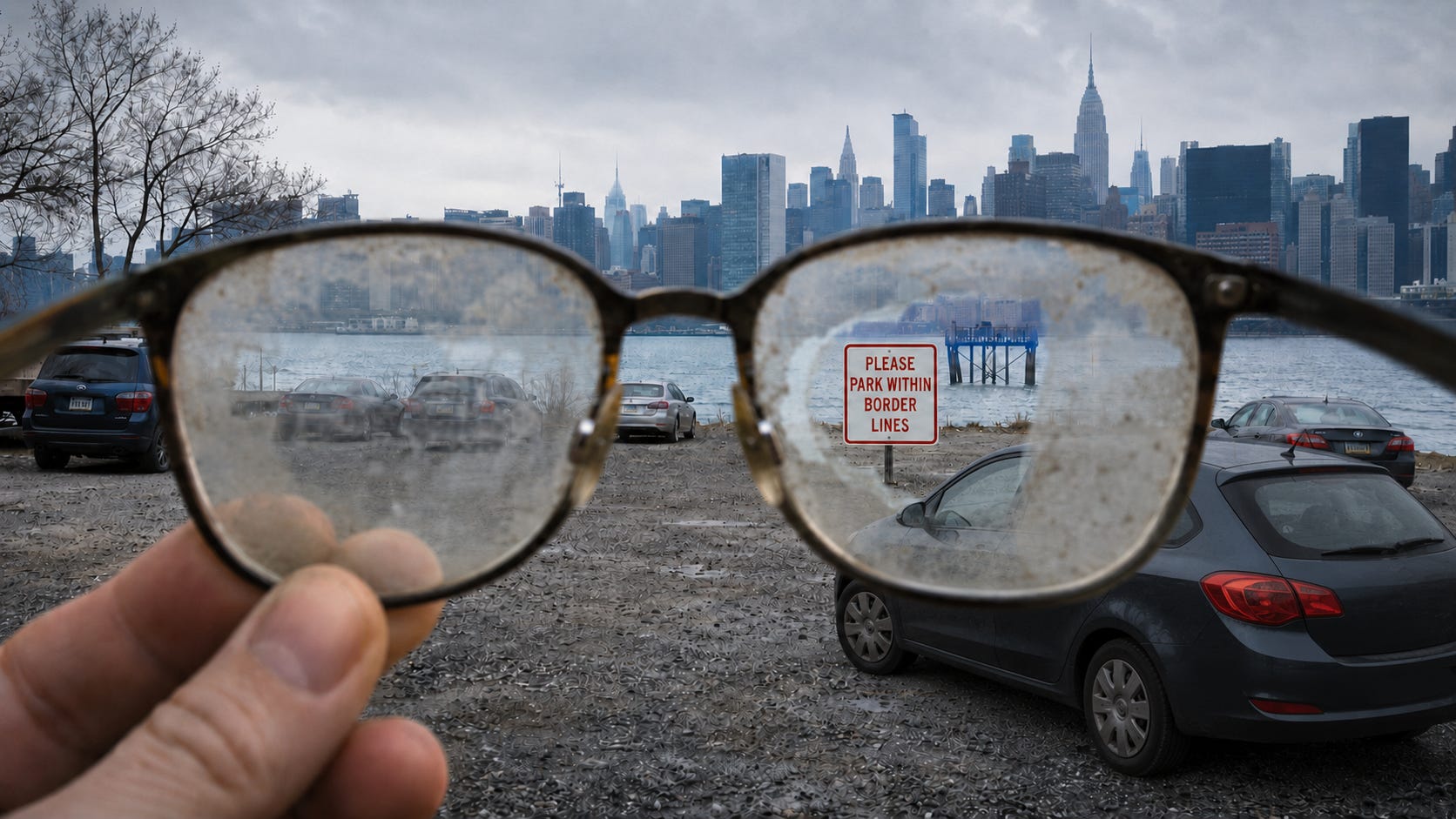
Cunneen acknowledged that it was a parking lot but said its boundaries were unclear. Cars park there during events at the Sanctuary, while anyone trying to follow the waterfront is left to navigate a public realm whose edges have become more theoretical than physical.
Jones revealed that RIOC’s legal team was reviewing its commercial agreements, including boundaries, permits and fees. Some activities might require permits they do not currently have, he said, and the Sanctuary was among the agreements being examined.
Berdy asked, “What are the Sanctuary’s boundaries?”
Then she covered her mouth and giggled, as though she had accidentally said aloud the question that had been sitting quietly at the table.
“Yeah,” Jones answered. “Exactly. Exactly.”
Berdy’s gesture did not prove she knew a secret, nor did Jones’s answer establish that the Sanctuary had done anything improper. The Sanctuary’s boundaries were like perfume on a woman who considered the bottle a single serving. Invisible, but suddenly occupying the entire waterfront. RIOC was still trying to determine where the commercial operation ended and the public waterfront began.
Before We Pick the Benches
RIOC says this is the beginning of a community conversation. Cunneen described a walking workshop, an online survey and opportunities for residents to consider lighting, seating, safer paths and bicycle access. Dr. Melamed asked whether the waterfront could guide visitors north toward Island businesses instead of allowing tourist activity to begin and end beside the tram. “We need to try to monetize these things,” she said, pulling the discussion away from decorative improvements and toward public value. Residents are being asked to improve the tourist experience. Tourists have already contributed by keeping the local economy in showroom condition: untouched.
There is something encouraging about being invited into the process before a finished plan arrives wrapped in urgency. Jones and Cunneen appeared more open than they have at many meetings, and Felina gave that openness substance. She understood the structures, the agencies, the missing agreements and the limits of what RIOC could honestly claim to know.
Still, the community conversation and the legal review are moving beside each other. Their order matters. There is a difference between asking residents what the waterfront should become and asking where to place the chairs after control of it has already been settled.
For years, Roosevelt Island has watched confident people answer questions they did not understand, often protecting their authority by making the answer more complicated. Felina did something more reassuring. She made uncertainty clear, and Cunneen allowed the answer to remain hers.
The pier had no clear owner. The parking lot had no clear edge. Felina, at least, knew exactly where certainty ended.
This newsletter travels best hand to hand. If you know someone who would read this all the way through, they are probably who it is for.
I can help with some of this. First, under Susan Rosenthal, RIOC shipped tons of archival records to Albany because, she claimed, RIOC lacked enough space for them. There were objections, especially from Judith Berdy over creating a lack of access, but Rosenthal shrugged it off. The records would all be available in an Albany warehouse. It might just take longer to locate them. You can just imagine the RIOC file boxes buried in a corner under the history of Wellsville, probably water damaged and carelessly indexed if indexed at all. This was probably more government sloppiness than subterfuge, but losing records never hurts the bad guys.
As for the Sanctuary, Howard Polivy was on the board and knows the history of what happened when Hudson-Related evicted the church to make way for the Sanctuary. Originally announced as a speakeasy, it was slowly reduced to what you have now after the Roosevelt Island Daily raised hell about its location next to the Octagon playground.
Thanks to RIOC, Hudson-Related and our always easy to work with city Buildings Department, the Sanctuary was built out without a single building permit. Everyone knew because we reported it. H-R and RIOC pointed fingers of responsibility at each other, then the Buildings Department did its useless thing. After multiple residents complained about the lack of permits, the department sent inspectors out four times at last count. It was in the official records. Two inspectors showed up but no one answered the door; so, they left. Hilariously, the other two said they were unable to find the bulilding. More...