

The role looks stable from the outside. A President and CEO is appointed. A contract is approved. A salary is set. On Roosevelt Island, that salary currently sits at approximately $240,000. For a single public role overseeing a small, contained community, the number stands out.
And then, almost inevitably, they leave. No recent CEO has lasted more than two years. Some exits come with press releases; others follow executive sessions. Some trail lawsuits, internal disputes, or investigations that never fully surface. Residents hear about the ending, rarely the process that led to it.
The pattern is not subtle. The job comes with authority, but it also comes with a short clock.
A brief note:
This newsletter is written once a week and supported almost entirely by readers sharing it quietly with one another. If you were forwarded this, subscribing ensures it arrives without relying on someone else to remember you.
The Role: Two Titles, One Reality
Ask most residents who runs Roosevelt Island, and the answer comes quickly: the CEO. Others give a different answer: the State, the Governor, what some have long referred to as “the chambers.” That split is not confusion. It is a signal.
The role is not just CEO. It is President and CEO. Two titles, one position, double the expectation. But the reality is tighter.
Some prior CEOs have described, in varying degrees of detail, how control actually flows, often through the State and more specifically through the Chair of the Board. Others have only hinted at it. Those hints tend to travel.
Which raises a quieter question. Is the double title meant to elevate the role, or to soften the reality of it?
Because the title suggests something larger than what the role is allowed to be in practice. The limits of the role are easier to see not in the title, but in how decisions actually move.
The Forces That Shape the Role
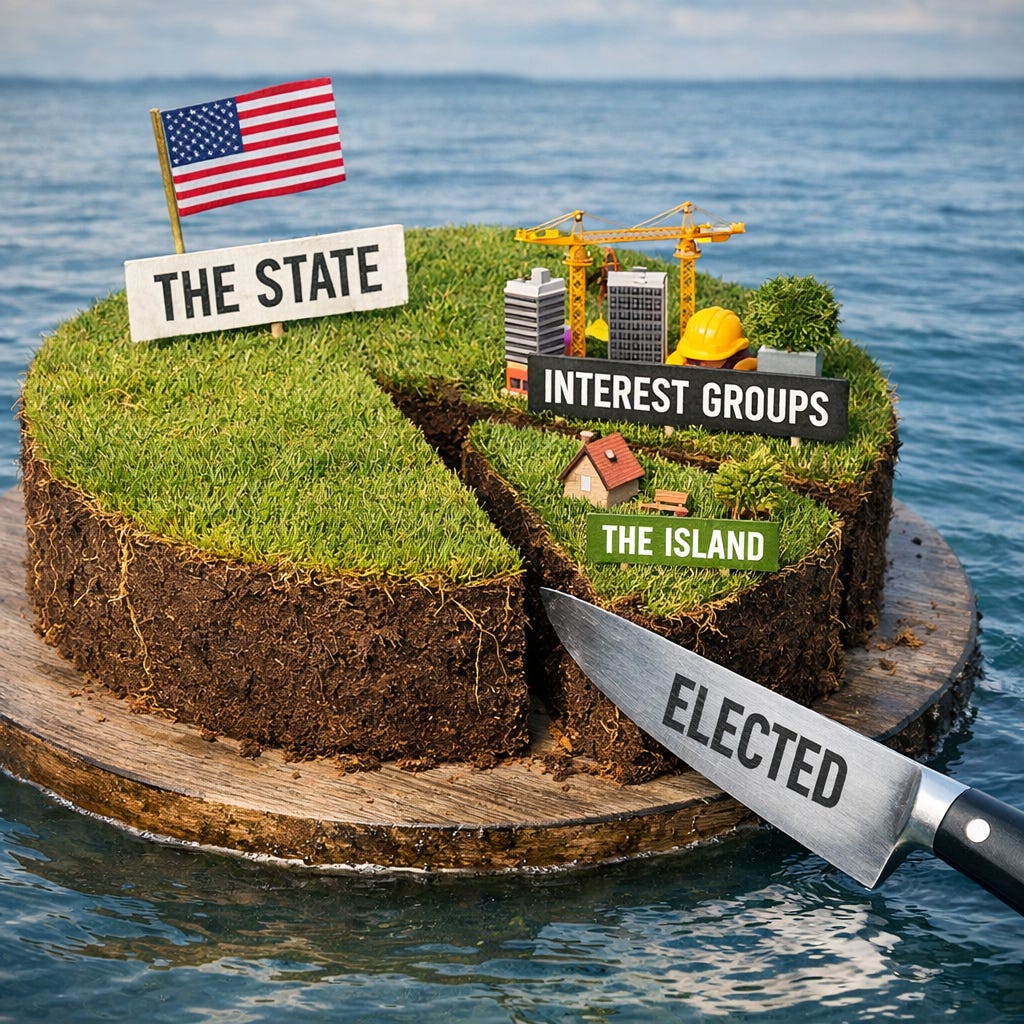
Formally, the CEO reports to the Board, but in practice the role is defined by managing expectations between the State, developers, and the public, with occasional input from elected officials. The center of day‑to‑day power tends to run through the Board Chair rather than the full Board. Records and reporting around the interim period suggest regular status check-ins between the Chair, the CEO, and select board members; when asked publicly, that arrangement was denied, and subsequent requests for related calendar records were declined with support from the State. An appeal response indicated involvement from counsel within the Governor’s office. Set against that backdrop, the role sits between three forces:
The State
The Chair of the Board carries real weight. Direction does not come through open debate. It arrives already formed, already aligned.
The Builders
Developers appear when it matters. Large projects. Contracts. Timelines. When they are involved, decisions accelerate and resistance tends to disappear.
The Island
Residents and local advocates are the most visible force. Meetings, complaints, pressure. But attention comes in waves.
When the Island is vocal, elected officials step in, and when they do, the machinery of the State can move quickly. We have seen it before: after tram incidents drew sustained attention, City Council Member Julie Menin pressed for answers and action followed; when bus service faltered, State Senator Liz Krueger reached out to the MTA to coordinate more closely with RIOC and service improved. These moments do not happen in a vacuum. They tend to follow pressure, coverage, and organized advocacy.
The current steam plant effort, led by a growing group of residents pushing for transparency and a pause, has rallied attention, but the odds of a full reset are low given the alignment already in place. That is precisely the point: without sustained pressure that pulls elected officials into the room, outcomes tend to proceed as structured. When that pressure appears, even briefly, it can change the trajectory. When that pressure fades, decisions consolidate among a smaller group with clearer interests and closer proximity to power. Not everyone is operating with the same information at the same time. Some are reacting to outcomes. Others are shaping them. The CEO operates within that reality.
What Actually Happens
The job works. Until it doesn’t.
At first, alignment is easy. The CEO is visible, responsive, engaged. Issues are handled, pressure is absorbed, and nothing rises high enough to disrupt the balance between the State, the builders, and the Island.
In the current moment, that restraint is visible. Faced with growing pressure around the steam plant, the response has been measured, controlled, and largely procedural. Residents are directed to email. Responsibility is framed as external. The issue is acknowledged, but not escalated.
So far, that approach is working. It keeps friction low with the State, avoids direct conflict with developers, and contains the issue within channels that do not force broader action.
Yet pressure is building. More than 1,400 residents have engaged. Community Board 8 has called for a slowdown and greater transparency. Questions are no longer isolated.
Editorial Note: The petition calling for a temporary pause of demolition pending full public disclosure of structural and environmental documentation can be found here. Residents are encouraged to review the language carefully and decide for themselves whether the request reflects their position.
Moments like this test the role structurally. As pressure grows, the CEO faces a narrowing set of options: escalate and risk misalignment with the forces above, or contain and risk losing control of the narrative on the Island.
History suggests what comes next is rarely decided in public view unless elected officials step in. When they do not, information tightens, conversations shift, and decisions begin to take shape before they are known.
The Present Moment
The pattern is not only a failure of leadership. It is a function of design.
CEOs arrive with authority on paper and expectations in public. They learn quickly where decisions are actually made, who needs to be kept aligned, and how far they can push before the role begins to push back.
Some try to navigate it. Some try to challenge it. None, so far, have outlasted it. The current moment is not unique. It is simply visible.
The question is not whether this CEO will succeed, but what success actually means in a system like this. And more importantly, what would need to change for the outcome to be different this time. Because without that answer, the next transition is only a matter of time.
There was a time, not long ago, when that pressure had a more constant presence. RIRA, for all its limitations, acted as a steady signal. Not perfect, but persistent. A body that kept attention from fading completely. Today, internal division has reduced that role. What remains is more symbolic than structural, much like the resident board members themselves.
New efforts are beginning to form. ArcRI has emerged around the steam plant, organizing residents and focusing attention. Its success will depend on whether that pressure reaches elected officials.
The longer question is whether it becomes something more. If it grows beyond a single issue, builds continuity, strengthens ties with elected officials, and sustains pressure across decisions, it may begin to fill the space that once existed.
When residents organize, apply pressure, and force visibility, outcomes shift. When that pressure fades, the system returns to its default state.
So the question is no longer about the CEO. It is about whether the Island can build structures that give its residents lasting influence.
Will this moment pass? Or does something more permanent begin here?
Theo,
It’s not always easy to keep writing. There are moments when the instinct is to step back, not lean in, but our partnership has made it easier.
I’m grateful you were willing to write this piece. I know how hard it was to put into words, especially knowing it would carry some of the weight I was struggling to place in what comes next.